
MSH Anti Condensation Motor Heater
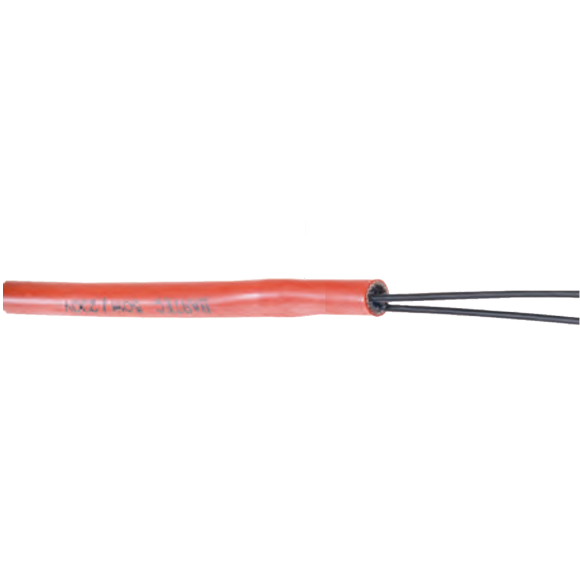

Industrial Control Products - MSH Anti Condensation Motor Heater
Flexible heating cable is used as a panel heater for electric motors and generators. The device effectively prevents the formation of condensate even in extreme climatic conditions, providing additional protection against corrosion damage that often causes machine failures.
MSH Anti Condensation Motor Heater
- Easy to connect thanks to its parallel structure
- High watts density power output
- Extremely flexible in a temperature range -50 °C to +180 °C with high di-electric strength
This highly flexible heating cable is used as an anti-condensation heater for electric motors and generators. The device offers added protection against corrosion damage that usually results in machine breakdowns by effectively preventing the formation of condensation water even under extreme climatic conditions
Structure MSH ant-condensation heaters are pre-wired, ready-to-use parallel heating cables with cold lead ends. Consisting of two parallel flexible copper leads with silicone glass-fibre insulation, the heating element of CuNi or NiCr alloy is wound around the cable. The 0.37 m long cold lead ends of FEP insulated stranded copper flex terminate the heating cable. The outer jacket consists of glass-fibre, covered with silicone rubber. Both ends of the heating cable are sealed with silicone rubber
Function The heating cables are integrated directly into the windings, i.e. built around the winding armature. Heat transfer is improved dramatically since the windings during the impregnation process
Special versions on request
- Differing supply voltage
- Differing heating cables
- Special heating cable length
Application Areas:
- Industrial motors
- Generators
- Pump motors
- Compressor motors
- HVAC motors
- Outdoor motors
- Marine motors
- Extruder motors
- Hot press motors
- Motors exposed to moisture
- Motors with frequent start-stop cycles
MSH Anti Condensation Motor Heater
| TECHNICAL DATA | |
| Material | Heating elements - CuNi or NiCr Insulation - alkali-free glass-fibre with silicone rubber Connection leads - 2 x FEP-insulated stranded copper flex, 0.5 mm² with crimped sleeve |
| Bending radius | > 25 mm |
| ELECTRICAL DATA | |
| Heat output | 12.5 W, 25 W, 50 W, 75 W, 100 W |
| Watts density | 50 W/m at nominal voltage |
| Nominal voltage | standard 230 V (special 110 V, others on request) |
| Permissible excess voltage | 1.2 x nominal voltage |
| Test voltage | 2000 V to earth |
| Temperature resistance class | H = +180 °C |
| Temperature range | -50 °C to +180 °C |
MSH Anti Condensation Motor Heater
- Easy to connect thanks to its parallel structure
- High watts density power output
- Extremely flexible in a temperature range -50 °C to +180 °C with high di-electric strength
This highly flexible heating cable is used as an anti-condensation heater for electric motors and generators. The device offers added protection against corrosion damage that usually results in machine breakdowns by effectively preventing the formation of condensation water even under extreme climatic conditions
Structure MSH ant-condensation heaters are pre-wired, ready-to-use parallel heating cables with cold lead ends. Consisting of two parallel flexible copper leads with silicone glass-fibre insulation, the heating element of CuNi or NiCr alloy is wound around the cable. The 0.37 m long cold lead ends of FEP insulated stranded copper flex terminate the heating cable. The outer jacket consists of glass-fibre, covered with silicone rubber. Both ends of the heating cable are sealed with silicone rubber
Function The heating cables are integrated directly into the windings, i.e. built around the winding armature. Heat transfer is improved dramatically since the windings during the impregnation process
Special versions on request
- Differing supply voltage
- Differing heating cables
- Special heating cable length
Application Areas:
- Industrial motors
- Generators
- Pump motors
- Compressor motors
- HVAC motors
- Outdoor motors
- Marine motors
- Extruder motors
- Hot press motors
- Motors exposed to moisture
- Motors with frequent start-stop cycles


